Introduction
If you run a restaurant, you've probably felt the pressure of commissions from delivery platforms and the feeling of “selling more but earning less”. This article shows you practical and low-cost tactics—designed for businesses in Latin America—to attract those who are now asking for apps to your direct channel (web, own app or WhatsApp) and thus improve your profits and customer loyalty.
We explain it to you with real data
The delivery market grew steadily in recent years and platforms have boosted demand, but at the expense of commissions that usually range between 15% and 30% and, on some models, additional charges that can increase the total cost per order. (blog.menuviel.com). These commissions include both the sales commission and logistics or positioning fees, and in specific cases the total cost to the restaurant may exceed 30% of the order value. (orders.co)
(Toast) (NerdWallet) (Expansion)
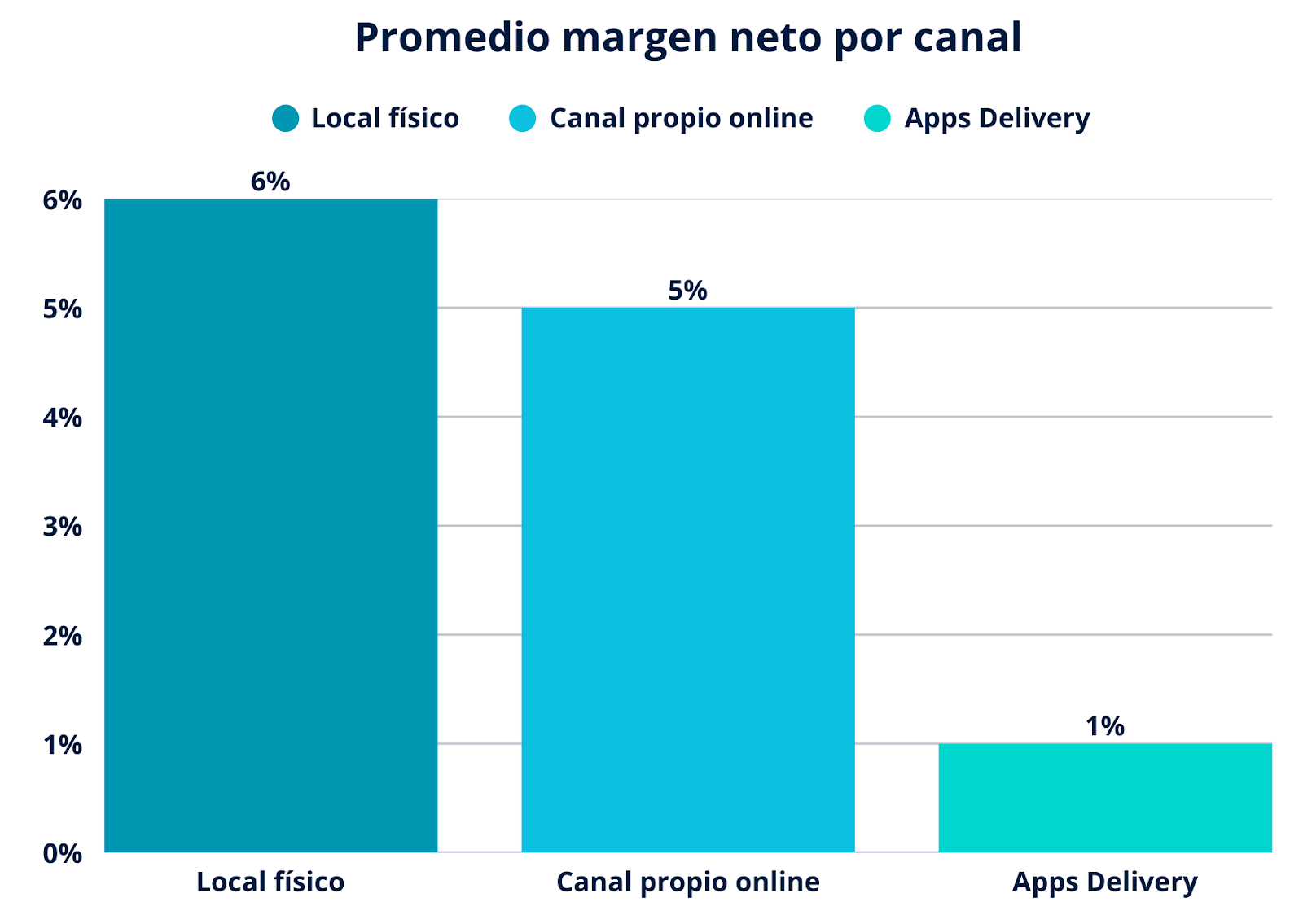
Impact on operating margin. Many restaurants operate on tight net margins; studies and industry guidelines show wide ranges, but it's common to see net operating margins ranging from low levels to around 7% — 15% in traditional businesses, with variations by format and region. (Toast). When a platform charges 20— 30% per order, The margin per order can be reduced to negative levels or close to zero, forcing restaurants to absorb costs or to transfer them to the final price.
Are they incremental sales or cannibalization? Academic evidence indicates that a significant proportion of app requests It doesn't always represent new sales: several studies estimate that it only enters 30% and 50% What comes in through platforms is actually incremental; the rest usually displaces sales that would have occurred in the theater or through direct takeaway. This means that, even if volume increases, net profit may not improve if commissions eat up margin and sales are cannibalized. (web.stanford.edu)
Economic opportunity of the direct channel. By developing a D2C channel (web, own app or WhatsApp), commissions are reduced and margin is recovered per order; in addition, industry platforms indicate that Direct selling allows you to capture data, customize offers and create loyalty programs that increase recurrence and customer lifetime value. Industry reports show that investing in D2C and digital experience can translate into significant increases in revenue and retention when properly implemented. (Deliverect)
Consumer preference and behavior. Sectorial surveys indicate that a significant proportion of consumers value convenience and direct promotions: studies by consulting firms show that a significant part of takeout customers would prefer cheaper or direct options if the experience is just as comfortable. (Deloitte). In addition, well-designed loyalty programs in Latin America improve brand perception and propensity to spend, with adoption and valuation figures higher than the global average in several regional studies. (HEY)
Quantitative conclusion. In short, commissions 15— 30% (occasionally > 30%), adjusted operating margins which may fall below 1% after commissions, and only 30— 50% of app orders can be incremental, making the direct channel a critical lever for recovering profitability and customer data.
Why is this important for your business?
What you gain if you apply this:
- Higher margin per order. By reducing or eliminating third-party commissions, you recover a significant portion of gross income from each sale, which translates into more money available to cover fixed costs, invest in quality or improve profits.
- Full control over the relationship with the customer. You'll have access to real contact data, order history and preferences, allowing you to communicate directly, resolve problems quickly and design personalized offers that increase recurrence.
- Better brand experience. By managing order and delivery, you can ensure presentation, timing and attention consistent with your brand promise, improving customer perception and reducing complaints.
- Higher customer lifetime value With your own data and communication, you can implement loyalty programs, referrals and segmented campaigns that increase the average ticket and purchase frequency, increasing the LTV of each customer.
- Business and pricing flexibility. You can design exclusive combos, promotions and prices on your direct channel without depending on the rules or visibility of an external platform, making it easier to experiment and optimize the offer.
- Operational and negotiating resilience. Less dependence on apps gives you room to negotiate better terms with platforms when you use them, and protects you against changes in commissions, policies or third-party service failures.
- Better information for decision-making. Proprietary data allows us to accurately measure key KPIs (margin per order, CAC, repurchase rate, NPS) and make operational and marketing decisions based on evidence.
What you can lose if you don't:
- Eroded margin. Keeping most of your sales in apps with high commissions reduces your earnings per order and can turn orders into unprofitable sales, especially low tickets or promotions.
- Loss of data and control. If the platforms concentrate sales, you don't access the customer's history or direct contact, which prevents loyalty, communicating news or recovering customers who had a bad experience.
- Strategic unit. Relying exclusively on apps leaves you vulnerable to changes in commission, contractual conditions or the entry of competitors who gain visibility within the platform.
- Lower ability to differentiate yourself. Without a strong channel of your own, you can't offer exclusive experiences, combos, or programs that encourage loyalty; your brand is diluted within the app's ecosystem.
- Hidden and reputational costs. More incidents, refunds and claims for deliveries or presentation can increase operating costs and damage your reputation without you being able to easily control it.
- Limited growth opportunities. Without your own data and without an optimized direct channel, it will be more difficult for you to reduce CAC, increase LTV and scale cost-effectively; you will grow in volume but not necessarily in profit.
How to apply it: good practices and actionable tips
1. Packaging as a marketing channel (packaging that sells)
What to do:
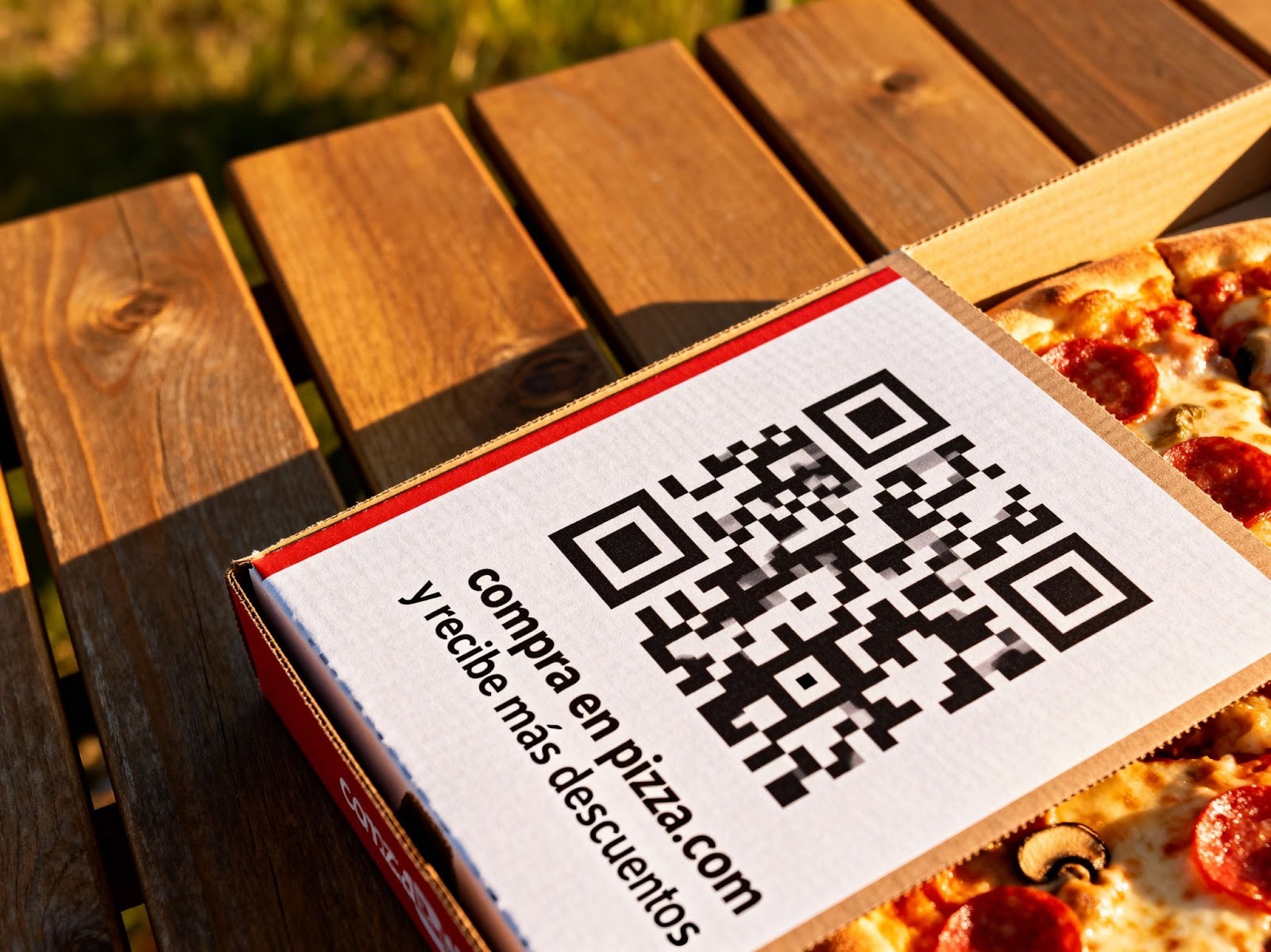
- Design branded bags and napkins: logo, colors and a clear message that invites you to order directly.
- Includes a visible QR that leads to an exclusive offer (e.g., “10% less by ordering direct”).
- Add an element that will last: magnet, card or flyer with a unique code for the next order.
Actionable tips:
- Use a QR that opens a simple landing with a one-click coupon.
- Rotate the incentive each month to measure which promo converts best.
- Print 500 bags/napkins with the initial design and evaluate response within 30 days.
2. Simple and effective loyalty program
What to do:
- Launch a points program simple: example “10 direct orders = 1 free”.
- Offers exclusive benefits (discounts, free products, access to special combos).
- Activate a referral program: rewards the person who recommends and the referral.
Actionable tips:
- Integrate the points balance in the ticket or in an SMS for immediate visibility.
- Segment by frequency and send personalized offers (birthdays, anniversaries).
- Promote the program on packages and social media with a clear CTA.
3. Pricing strategy and exclusive offers
What to do:
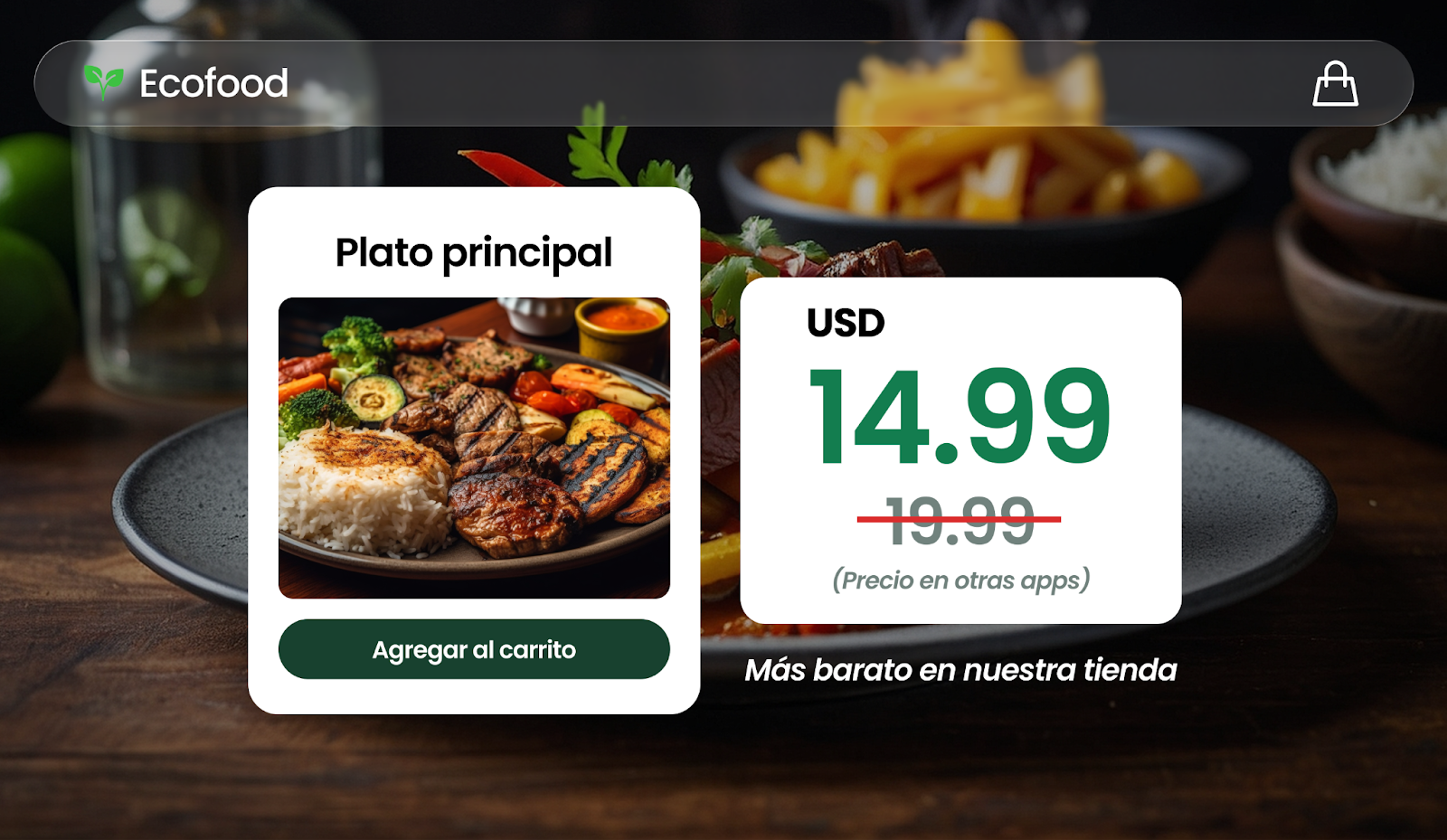
- Make the savings visible: show comparisons “App delivery price: $X — Price on your own channel: $Y”.
- Create exclusive combos only available on your own channel (family members, executives).
- Offers loyalty discounts and progressive rewards depending on the number of orders.
Actionable tips:
- Test 2 exclusive combos for 2 weeks and measure average ticket and conversion.
- Use simple messages in local and parcel delivery: “Best price here”.
- Adjust prices in your own app and channel to avoid cannibalization: keep the best value in D2C.
4. Focus on the segment that pays in cash and lives at medium distances
What to do:
- Communicate that you accept cash in direct orders and shows the delivery radius.
- Promote extended coverage for customers outside the typical range of apps, which normally do not exceed 3 km in radius from their location.
- Design specific offers for this segment (e.g., free delivery of 4—6 km with minimum order).
Actionable tips:
- Identify neighborhoods with high demand for cash and launch a local campaign (flyers, networks).
- It offers a small initial incentive (discount or free drink) to convert to the first direct order.
- It measures repeat purchases in that segment in 60 days.
5. Use apps but with your own cast team
What to do:
- Negotiate with platforms the option of operating with your own fleet to make deliveries. Thus, you continue to sell through them, but you manage the office, which significantly reduces commissions. This scheme is often referred to as the marketplace model or BYOC. Check with your platform's commercial executive to find out if they offer it and how to activate it.
- Evaluate a hybrid model: own fleet for key zones and schedules + 3PL in peaks or remote areas.
- Measure delivery rate and cost per order for each mode to adjust the mix.
Actionable tips:
- 2-week pilot: own fleet during dinner time + 1 3PL in peaks; compare CPD and delivery rate.
- It implements a quality protocol for delivery people (presentation, order management, time).
- Use an automatic fallback: if your own fleet is not available, 3PL is activated.
Personal Conclusion
Moving customers to the direct channel isn't just a savings tactic: it's an investment in the relationship with your customer and in the sustainability of the business. Start with small, measurable steps: parcel with QR, an exclusive offer and a points program. If you do it right, you'll see more margin, more data, and customers who return because of your brand, not because of an app.


